Les médias ainsi que nombre d' ouvrages ont évoqués à de très nombreuses reprises les informations transmises par un transfuge irakien, nom de code CURVEBALL, et l' importance de ces informations, pour les autorités US, dans le cadre de la guerre de 2003. Mais quand est publié le rapport Butler1, qui analyse le travail du Renseignement britannique sur la question des armes de destruction massives, une seule partie est retenue: Plusieurs informateurs du SIS sur l' Irak étaient défectueux. Et tant pis si le rapport évoque aussi la Libye, l' Iran, ou les tentatives de groupes terroristes de se procurer des ADM! Cela n'est que accessoire. La presse britannique ne verra pas une autre pépite contenue dans ce rapport. Il est vrai que l' information n' a fuitée que quelques années plus tard, Outre-Atlantique, mais personne dans la communauté journalistique ne paraît avoir fait le rapprochement pourtant évident à la lecture du rapport Butler: CURVEBALL, cette source qui fit tant de dégâts au sein de la CIA, puisque elle servit à la démonstration de Colin Powell à l' ONU, avait été aussi abondamment utilisée par le Secret Intelligence Service!
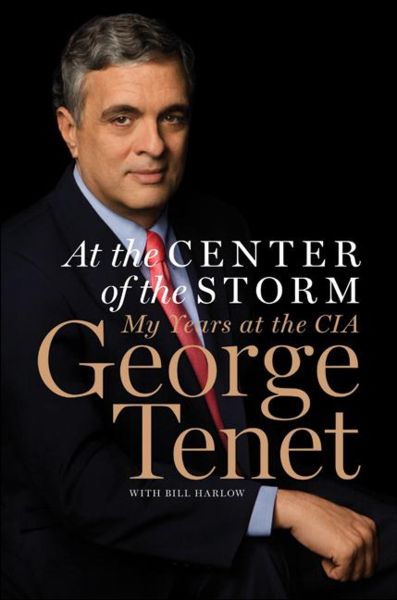
Ce document vise à l' analyse,dans le cadre du conflit irakien, du « jeu » d' un acteur auquel on prête moins d' attention que son homologue Outre-Atlantique: la Grande-Bretagne. Foin de sensationnalisme, le but sera d' exposer les contradictions, d' indiquer les questions restées sans réponse, et ce en se basant sur des sources disponibles au public: Les analyses du JIC; le Rapport Butler; le « Comprehensive report of the Special Advisor to the DCI on Iraq's WMD », plus connu sous le nom de rapport Duelfer, et les mémoires de Georges Tenet pour n'en citer que quelques unes. Sera rappelé le fonctionnement de la communauté britannique du renseignement;comment furent prises en compte les informations de CURVEBALL et l' évaluation de ces informations, ainsi que sa crédibilité; les ratées, contradictions, et les dégâts causés.
PRÉSENTATION DE LA COMMUNAUTÉ BRITANNIQUE DU RENSEIGNEMENT.
La communauté britannique du renseignement comprend les services suivants:
En premier lieu, le Secret Intelligence Service, appelé aussi SIS ou sous son nom antérieur, MI6. Le SIS est chargé de la collecte du renseignement hors du Royaume-Uni, et ce par le biais d'officiers traitants, déployés sous couverture diplomatique dans les ambassades de Sa Majesté, aussi bien à Paris que Amman, ou New York, Buenos Aires, Kuala Lumpur etc.. . Le SIS entretient aussi des contacts,plus ou moins étroits, avec nombre de services secrets. On retiendra ici les services secrets australiens, dont ils ont contribués, avec le MI5, à la formation au tout début des années 50, mais aussi US, allemands, ou jordaniens, pour n' en citer que quelques uns. Le SIS opère aussi à l' étranger en envoyant des officiers sous une couverture commerciale, ou journalistique. Enfin, il peut travailler sur le territoire du Royaume même, par exemple pour collecter des informations sur l' IRA (particulièrement dans les années 70) ou recruter des citoyens étrangers. Dans ce but, des sections conjointes MI5/MI6 avaient été créées durant la guerre froide, ciblant le Moyen-Orient, la Chine et l' URSS.
Le Security Service, appelé aussi MI5, est le service chargé de la sécurité du Royaume, et ce par son travail de collecte du renseignement. Les principales priorités du MI5 ont fortement évoluées au fil des années: l' espionnage allemand durant la seconde guerre; les espions du Pacte de Varsovie durant la Guerre Froide, concurremment, à partir du début des années 70, avec la surveillance de la « subversion intérieure », puis le terrorisme, irlandais (IRA, INLA etc..) et aujourd'hui international. Le MI5 se base sur ces officiers au QG, dans les bureaux régionaux, ainsi que sur ces représentants dans les ambassades du Royaume-Uni à l' étranger, qui ont pour mission la sécurité de l' ambassade, et parfois aussi le contact avec les services secrets du pays d' accueil. Il ne peut procéder lui-même à des interpellations, n' ayant pas de pouvoir de police judiciaire, et doit faire appel pour cela aux forces de Police locale, à la Special Branch jusqu' à sa disparition il y a quelques années, ou le SO 13 (Antiterrorisme).
Cette communauté est complétée par le DIS, Defense Intelligence Service, chargé du Renseignement militaire, et le National Criminal Intelligence Service (NCIS), chargé de la lutte contre la criminalité organisée, qui sera incorporé dans le SOCA (Serious Organised Crime Agency) en 2007.
Enfin, la coordination de ces différents services relève du Joint Intelligence Committee (JIC), qui est aussi chargé de synthétiser les informations provenant des différents services dans des rapports (Assessments). Les différents services de la communauté britannique du renseignement y détachent leurs représentants pour assurer le fonctionnement permanent du JIC. Par exemple,le responsable de la coordination du renseignement du JIC de 2002 à 2005 était un ancien chef de station du SIS.
IDENTIFICATION.
Comme indiqué plus haut, c'est la lecture du Rapport Butler qui permit de découvrir l' importance des informations de Curveball dans les rapports du Joint Intelligence Committee: Selon ce document, à compter de avril 2000, une source nouvelle apparaît pour le Secret Intelligence Service, source dont les informations sont transmises par un « Service de liaison ». Les informations transmises par cet « asset » concernent un domaine: L' utilisation de laboratoires mobiles pour la production d' armes biologiques en Irak.
Or, comme l' indique George Tenet, les informations venant de CURVEBALL, qui était débriéfé par le BND, auraient été transmises à deux autres services de renseignements. Bob Droggin, dans son ouvrage « CURVEBALL », indique que un de ces services fut le MI-6, le Renseignement extérieur britannique.
Le débriefing de CURVEBALL par le BND2 commença fin 1999-début 2000. Les informations que CURVEBALL livre? L' utilisation de laboratoires mobiles par le régime de Saddam Hussein, dans le but de produire des armes biologiques. Le BND allemand? Un service avec lequel les britanniques coopèrent,justement,un service « ami ». Les informations de CURVEBALL? Discréditées « après coup » officiellement, ce qui est le cas y compris pour l' informateur du Service de liaison, selon le rapport. La boucle est par conséquent bouclée.
En revanche, il n'est pas indiqué si les rapports étaient transmis au chef de station du Secret Intelligence Service à Berlin, ou si ce fut Gunter Haendly, alors Chef de station du BND à Londres, qui les apporta au QG du SIS3.
Concernant la source elle-même, Richard Dearlove indiquera à la Commission Butler que Vauxhall Cross a pu vérifier que cette source avait bien travaillée à l' endroit ou il aurait pu avoir accès aux informations que CURVEBALL affirmait détenir. Il n'est pas indiqué si le SIS est arrivé à cette certitude avant, ou après la guerre.
INFORMATIONS FOURNIES PAR CURVEBALL ET UTILISÉES PAR LE SECRET INTELLIGENCE SERVICE.
Le rapport final de l' UNSCOM de janvier 1999 indiquait que « l'Irak a autrefois étudiée l' utilisation de laboratoires mobiles pour la production d' agents biologiques ». CURVEBALL remplacera cette éventualité par des certitudes.
La première référence aux informations provenant de la « liaison source » apparaît dans le rapport du JIC du 19.04.2000. Le rapport Butler indique que les informations ont été reçues quelques jours auparavant. C'est aussi la première fois que les britanniques évoquent l' utilisation par l' Irak de laboratoires mobiles pour la fabrication d' armes biologiques. Le rapport indique que « l'Irak semble étudier l' utilisation de laboratoires mobiles (..) et a commencée la production dans des laboratoires mobiles » d' agents biologiques.
La prudence est de mise, l' information est estimée « techniquement possible », étant donné que l' Irak est considérée comme ayant suffisamment d' expertise, d' équipements et de matériel pour produire des armes biologiques (JIC 19.04.2000) mais ces renseignements sont basés sur une seule source (Ici, JIC report du 15.03.2002).
Notons que si le SIS, et le Joint Intelligence Committee, sont prudents quant aux informations mêmes de CURVEBALL, elles serviront beaucoup dans l' analyse globale sur le programme d' armes de destructions massives irakiennes. Le rapport BUTLER le sous-entend de manière extrêmement claire, au paragraphe 244, ou il est indiqué que les rapports transmis par le « service de liaison auront un impact significatif » sur le rapport du JIC du 27.02.2002: « L'Irak, si ce n'est pas déjà le cas, peut produire de grandes quantités d' agents biologiques en quelques jours ».
L 'estimation du JIC du 15.03.20024 indique en page 4, plusieurs informations directement issues de CURVEBALL. Ce document fait clairement référence aux rapports provenant d'une source traitée par un « service de liaison ». Selon le rapport du JIC, cette source aurait indiquée les informations suivantes: le programme des laboratoires mobiles aurait été lancé en 1995; il comprenait 7 laboratoires,six montés sur camion, et l' un sur train, qui furent construits; trois étaient opérationnels en mars 1999. ces laboratoires pouvaient produire 5 types différents d' armes biologiques, sans plus de détails, et auraient déjà produits de 20 à 30 tonnes d' armement biologiques. Le rapport réaffirme le fait que « si les informations indiquées n'ont pas été corroborées, nous estimons que elles sont crédibles d'un point de vue technique »
Cette prudence disparaît très clairement, en revanche, dans le rapport du JIC du 24.07.2002, en page 5: Il y est indiqué, de manière catégorique, que l' Irak « a développée des laboratoires mobiles pour les programmes d' armes chimiques et biologiques ». Surtout que, selon le document, l' Irak dispose des compétences (humaines) pour un tel objectif.
Le rapport du JIC du 09.09.20025 emploie un ton tout aussi catégorique:
« L' Irak a appris de la Guerre du Golfe l' importance des laboratoires mobiles, plus difficiles à trouver que les installations statiques. Par conséquent, l' Irak a développée, pour les militaires, des systèmes de fermentation, qui peuvent être montés sur train ou sur route (Dans des camions, NDA). Ils peuvent produire des agents biologiques. ».
L'hypothèse émise (« L'Irak pourrait utiliser des laboratoires mobiles »)est maintenant considérée comme une certitude, alors que, selon le rapport Butler6 , ses informations étaient traitées avec prudence par le JIC avant d' être confirmées par une autre source7, plusieurs mois après. Ce point sera examiné dans la dernière partie.
Cette information relative aux laboratoires mobiles sera « confirmée » peu après ce rapport du JIC, puisque le 11.09.20028 , un informateur du SIS répondant au nom de code de RED RIVER9 confirme l' information sur les laboratoires mobiles utilisés par le régime de Saddam Hussein pour la production d' armes biologiques. La source était alors considérée comme « fiable »10 . Elle se base, pour cette information, sur une « sous-source ». L' importance potentielle11 de cette « source à l' essai », pour reprendre la terminologie du rapport Butler, est telle que Tony Blair est informé de son existence le 12.09.200212.
L' information venant de RED RIVER n' a pu être insérée dans le rapport du JIC du 09.09.2002. Elle sera en revanche prise en compte dans le rapport du JIC du 28.10.200213. Entre ces deux documents, sur demande du Premier Ministre britannique Tony Blair, est publié à l' intention du public le « dossier du gouvernement » du 24.09.200214 . Ce rapport, qui se basera beaucoup sur le rapport du JIC du 09.09.2002, prend aussi en compte le rapport reçu par le SIS le 11.09.2002. Il évoque à plusieurs reprises les laboratoires mobiles: « Nous estimons que l' Irak a (...) développée des laboratoires mobiles à usage militaire, corroborant les rapports précédents quant à la relatifs à la production d' agents biologiques dans des installations mobiles » (Pages 8 et 9). Ce projet aurait été développé à partir de 1995 sous la responsabilité Dr Rihab Taha, « connu pour avoir joué un rôle central dans les programmes irakiens après la guerre du Golfe » (De 1991, NDA). Le rapport enfonce le clou en indiquant que le JIC a conclu que l' Irak a suffisamment d' expertise, de matériel et d' équipement pour produire en quelques semaines des agents biologiques, en utilisant ses laboratoires de bio-technologies.15
ÉVALUATION DU RENSEIGNEMENT DE CURVEBALL DANS L'IMMÉDIAT APRÈS GUERRE.
Le rapport Butler se montre très vague quant aux informations de la « liaison source »: il indique seulement que, dans le cadre des vérifications entreprises par le Secret Intelligence Service, il s'avéra que « d'importants aspects des informations reçues par cette voie étaient faux ». Le SIS n'a pu interroger la « liaison source » que après la guerre. À la date du rapport Butler, Vauxhall Cross n'avait pas encore terminé le débriefing. Il en ressort, selon le SIS, que « des détails importants n'apparaissaient pas dans les rapports du service de liaison », bien que, étant donné l' accès limité à cette source, il soit encore prématuré de conclure. Plus concrètement, le SIS conclut que « la production de laboratoires mobiles aurait eu lieu sous une forme brouillonne, et aurait eu une vie plus courte que ne l affirme l'agent ». Par conséquent, la fonction la plus vraisemblable des remorques qui seront trouvées après la guerre n'était pas la production de stocks de matériaux (Paragraphe 408).
La conclusion du SIS, dans le cadre de son évaluation après-guerre, est néanmoins sévère: les informations de cette source sont considérées comme « inexactes »16 ou, selon le rapport Butler, « comportant de graves lacunes »17 quant aux affirmations, datées de 200018 , sur la fabrication récente d'armes biologiques. La Commission en tira la conclusion que cette fabrication « n'avait pas eu lieu ».
ÉVALUATION DU RENSEIGNEMENT DE CURVEBALL: LE RAPPORT DUELFER.
La fin des hostilités entraîne, entre autres tâches, la nécessité de retrouver les armes de destruction massives que possédait le régime irakien, comme l'affirmaient au premier rang les autorités US et britanniques. C'est dans ce cadre qu’est créée, sous la supervision de la CIA, l'Iraqi Survey Group (ISG, successivement dirigée par David Kay et Charles Duelfer). Le rapport final de l'ISG est rendu le 30.09.2004.
Le rapport Duelfer évoquera à plusieurs reprises la thèse des laboratoires mobiles en vue de la production d'armes biologiques. Ici se posent plusieurs questions: Saddam Hussein avait-il la volonté de se doter d'armes de destructions massives? A il essayé? Enfin, le régime irakien disposait-il de laboratoires mobiles pour la production d'armes biologiques? Les réponses sont : oui, oui, et non.
L'Irak a bien envisagée de se doter de laboratoires mobiles aux fins de production d'agents biologiques. Cette possibilité fut examinée par plusieurs responsables irakiens en 1987. Mais l'ISG ne découvrira que un projet de laboratoires mobiles, qui avait été lancé en 1994 pour moderniser l'agriculture irakienne, donc sans rapport avec la fabrication d'armes NBC.
Le régime irakien n'avait plus d'ADM uniquement à titre temporaire, attendant la fin des sanctions pour recommencer son stock. Des tentatives sont en tout cas dénoncées. Ainsi, des négociations auraient été conduites entre le régime et des entreprises françaises, dans les années 90. Les contrats portaient sur des armements conventionnels et de possibles laboratoires mobiles19.
Se basant sur les informations de CURVEBALL20, l'ISG inspectera les sites désignés et interrogera une soixantaine de personnes. Conclusions: les sites désignés n'étaient pas adaptés; aucune des personnes interrogées n'a reconnu la participation du site aux affirmations de CURVEBALL. Seul le Directeur de la compagnie Al Nahrayn Seed fournira une information potentiellement intéressante, en indiquant que durant l'opération « Renard du désert » de 1998, la compagnie reçut l' ordre de monter sur rail des laboratoires. L'inspection de l'ISG conclura que l' équipement n' avait jamais été utilisé pour des armes NBC.
L'ISG examinera aussi les deux installations mobiles découvertes après la guerre, et que le Président des USA présentera trop rapidement comme des preuves des ADM irakiens: Le premier laboratoire est découvert à Irbil en avril 2003; le second en mai près du laboratoire de recherche Al Kindi à Mossoul. Selon l'ISG, la remorque « dispose des équipements et des composants qui peuvent être compatibles avec la production d'agents biologiques ». Toutefois, l' ISG n' a pas trouvée de preuves pour affirmer que la première remorque ( plus complète que celle de Mossoul) jouait un rôle dans la fabrication clandestine d' agents biologiques; le rapport détaille ensuite les raisons pour lesquelles l' installation, au contraire, n' est pas adaptée pour la fabrication d' agents biologiques: incompatibilité de l' équipement pour l' utilisation en vue de fermentation, indispensable pour la fabrication d' armes biologiques; absence d' instruments pour le contrôle du processus etc... La conclusion de l'ISG est que les deux installations servaient de générateurs d'hydrogènes pour des ballons météorologiques, pour l'artillerie de la Garde Républicaine irakienne. C'étaient donc des armes conventionnelles, et non de la catégorie NBC (Nucléaire, Biologique, Chimique).21.
Ce discrédit de l'information (rien n'a été trouvé démontrant que les Irakiens disposaient de tels laboratoires) sur les laboratoires mobiles sera confirmé antérieurement par la Commission SILBERMAN22 et l’UNMOVIC23
LE SIS DISCRÉDITÉ.
Cette affaire a fortement affectée le SIS, principal pourvoyeur en informations, dont nombre se sont avérées fausses. La conséquence aurait été le licenciement de plusieurs officiers du SIS, sans que aucun nom ne soit cité. Coïncidence? En 2004, le Directeur du MI6, Richard Dearlove, quitte le service. Suivent le chef de station du SIS à Washington, Ian Forbes McCrédie, ainsi que Mark Allen, ancien responsable de la Division « Anti-Terrorisme International » au Contrôleurat Global Tasks, Directorate of Production and Requirements. La même année, le Director of Production and Requirements du SIS, dont le nom n' a pas été rendu publié, part dans le secteur privé et est remplacé par un vétéran du Service, Nigel Inkster.24. En revanche,passe entre les gouttes Michaël David Shipster, qui a participé à la collecte du renseignement sur l' Irak. Il aurait même dirigé le Contrôleurat Moyen-Orient en 2003. Il est envoyé diriger la représentation du SIS à Washington, à la place de Ian McCrédie25.
BEAUCOUP DE QUESTIONS; PEU DE RÉPONSES.
Beaucoup de doutes ressortent de cette analyse: Pourquoi, d'une possible hypothèse, sur la base des informations de CURVEBALL, le SIS est devenu certain que l'Irak disposait de laboratoires mobiles de fabrication d'armes biologiques, et ce bien avant d'en obtenir « confirmation » d'un informateur qui sera ensuite discrédité? D'autres informations sont-elles parvenues, allant en ce sens? Ou bien ces informations ont été présentées comme des certitudes, sur pression? De qui? Du Directeur du JIC, ou de plus haut? Ou bien les informations avaient faits le tour des services secrets, y compris étrangers, a un tel point que, une fois l'informateur discrédité, il était devenu impossible de savoir les informations venant de lui et celles qui n'en venaient pas?
La prise en compte des informations de CURVEBALL indique que le SIS estimait ses rapports crédibles26.. Vauxhall Cross, tout comme la communauté du renseignement US, paraît ici avoir été convaincue par la quantité d'informations venant de CURVEBALL27.
Le rapport Butler, comme indiqué plus haut, est catégorique: le SIS n'a reçu confirmation des informations de CURVEBALL que en septembre 2002, alors que les certitudes de la communauté du renseignement sont antérieures de quelques mois. Par conséquent, les certitudes du JIC se basaient sur les informations de CURVEBALL, mais aussi sur l’estimation faite que, techniquement, une telle utilisation des laboratoires mobiles est possible.
Partant de ce principe, c’est une très grossière erreur d’analyse qui paraît avoir été commise : Il convient de ne jamais prendre pour argent comptant les informations venant d’une seule source, surtout si l’on ne peut pas les confirmer. Tel est le principe de tout service secret, et le NIE en date de 2007 consacré à l’Iran rappelle les règles de l’analyse : L’utilisation des termes « probable » ou « possible » indiquent une probabilité assez forte ; « peut » ou « pourrait » indique que l’ information est incomplète, fragmentée, indisponible, ou vague. Soit le SIS était convaincu par les rapports provenant des informations de CURVEBALL, soit ces rapports furent insérés dans le JIC sur ordre « d’en haut », au mépris d’un principe du renseignement : Ne faire état que des informations dont on est certain, et non pas de celles qui vont dans le sens du politique. Dans la dernière hypothèse, les accusations portées contre John Scarlett, alors Directeur du JIC d'avoir exagéré les rapports, pour les rendre « plus sexy », et ainsi justifier le soutien britannique à l'envoi des troupes, trouveraient ici confirmation. À cet égard, le fait que John Scarlett prenne sur lui l'entière responsabilité du travail du renseignement peut avoir pour but soit de couvrir la communauté britannique du renseignement, soit de faire retomber le blâme sur lui pour protéger les autorités, et Tony Blair en premier ressort. Ou bien les deux.
La dernière hypothèse n'a malheureusement pas été étayée par des preuves, sans être entièrement impossible. Mais une hypothèse plus simple est possible : Depuis la découverte par les inspecteurs de l' ONU, au tout début des années 90, des programmes NBC irakiens, les inspecteurs de l' ONU ainsi que les administrations US et britanniques, et leurs services, étaient arrivés à la conclusion suivante : Saddam Hussein continue à cacher des choses sur les ADM28. . Il ne coopère pas pleinement. Ce que confirment les informations, parcellaires, qui arrivent. L' information de CURVEBALL, sa précision, et sa richesse, ne pouvaient mieux tomber, venant étayer une croyance commune dans les services sur les plans du régime irakien. Même si les services secrets, ainsi que les membres des services, n' étaient pas unanimes sur cette question. Toutefois, au sein de la communauté US du renseignement, et un peu, aussi, de la communauté UK, le débat paraît avoir plus porté sur l' ampleur même du programme NBC irakien que sur son existence, réelle ou supposée.

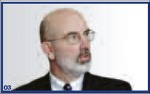
 CURVEBALL
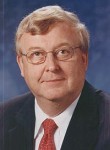 Alan Foley Aujourd'hui ,il s'avére que les informations de "Curveball" étaient fausses. Débriéfé par le BND, le service de renseignement fédéral ouest-allemand, ses informations avaient été passées a la communauté US du renseignement. Les témoignages obtenus montrent bien, pourtant, que bien avant que l'Irak ne soit envahie, les informations de Curveball ne sont pas fiables. Témoignent en ce sens deux hauts responsables de la CIA a l'époque: Tyler Drumhueller dirigeait alors la Division Europe de l'Ouest de la Direction des Opérations de la CIA (Après avoir servi a Vienne comme Chef de station) et Alan Foley, ancien spécialiste de l'analyse des informations sur les armements soviétiques, qui en 2003 dirigeait le WINPAC (Weapons, Intelligence, Non-Prolifération and Arms Control Center) , une division analytique de la CIA chargée de l'analyse d'informations sur les armes , y compris chimiques ou biologiques.Pourtant, on utilisera les informations de Curveball, y compris lors du discours de Colin Powell.... Pour l'instant il n'a pas été possible de déterminer exactement ce qui s'était passé au niveau de la circulation de ses informations.